Root Canal Treatment in Grants Pass, Oregon
Relieve the problem while preserving your natural tooth when possible
A painful or damaged tooth doesn’t always mean the tooth needs to be removed.
When the nerve, or dental pulp, inside a tooth becomes inflamed or infected, root canal treatment may allow us to remove the infection and preserve your natural tooth rather than extracting it.
At Allen Creek Dental, Dr. Michelle Johnson evaluates the source of your symptoms, the condition of the tooth, and whether the tooth can be predictably restored before recommending root canal treatment.
If you are experiencing tooth pain, sensitivity, swelling, or a tooth that simply doesn’t feel right, we will first determine what’s causing the problem. Not every toothache requires a root canal.
Do I Need a Root Canal?
Tooth pain can have many different causes. A cavity, cracked tooth, gum problem, bite issue, infection, or inflammation of the dental pulp can all produce symptoms.
That’s why we don’t recommend a root canal based on pain alone.
During your examination, Dr. Johnson evaluates the tooth and surrounding tissues and uses diagnostic testing to determine what may be causing your symptoms and whether the tooth can be saved.
Root canal treatment may be appropriate when:
- Deep decay has reached the dental pulp.
- The pulp has become inflamed or infected.
- A crack or injury has damaged the pulp.
- A tooth has developed an infection around the root.
- Persistent sensitivity is associated with pulpal inflammation.
- The tooth can be restored and preserving it is clinically appropriate.
In some situations, another treatment may be more appropriate. Our goal is to determine what is actually happening before recommending treatment.
Diagnosing the Source of Your Tooth Pain
A painful tooth doesn’t always tell us exactly what’s wrong.
We may evaluate how the tooth responds to different tests, examine the surrounding gums and tissues, evaluate your bite, and use digital imaging when appropriate to look at the tooth roots and surrounding structures.
Advanced 3D Imaging When We Need a Closer Look
Allen Creek Dental has an in-office 3D CBCT (cone beam computed tomography) scanner that can provide detailed three-dimensional images of your teeth, roots, jawbone, and surrounding anatomical structures.
A traditional dental X-ray provides a two-dimensional view. In certain situations, a 3D CBCT scan can give us additional information that may not be visible on a conventional X-ray.
CBCT imaging may be considered when we need additional information about:
- The number, shape, and position of tooth roots
- Complex root canal anatomy
- Infection or changes around the root
- Cracks or other dental concerns
- The relationship of a tooth to surrounding structures
- Treatment planning for more complex dental conditions
CBCT is not necessary for every patient or every root canal. When additional imaging is clinically appropriate, Dr. Johnson can determine whether the information provided by 3D imaging would be helpful in diagnosing your tooth and planning treatment.
Your evaluation may include:
- A review of your medical and dental history
- Examination of the affected tooth and surrounding tissues
- Pulp vitality testing when indicated
- Evaluation of your bite
- Digital X-rays when clinically appropriate
- 3D CBCT imaging when additional information is needed
- Discussion of your symptoms and concerns
- An explanation of your treatment options
Sometimes the source of discomfort is straightforward. Other times, determining which tooth is responsible requires careful testing.
Taking the time to diagnose the problem correctly is an important part of providing the right treatment.
Treating Infection While Preserving Your Natural Tooth
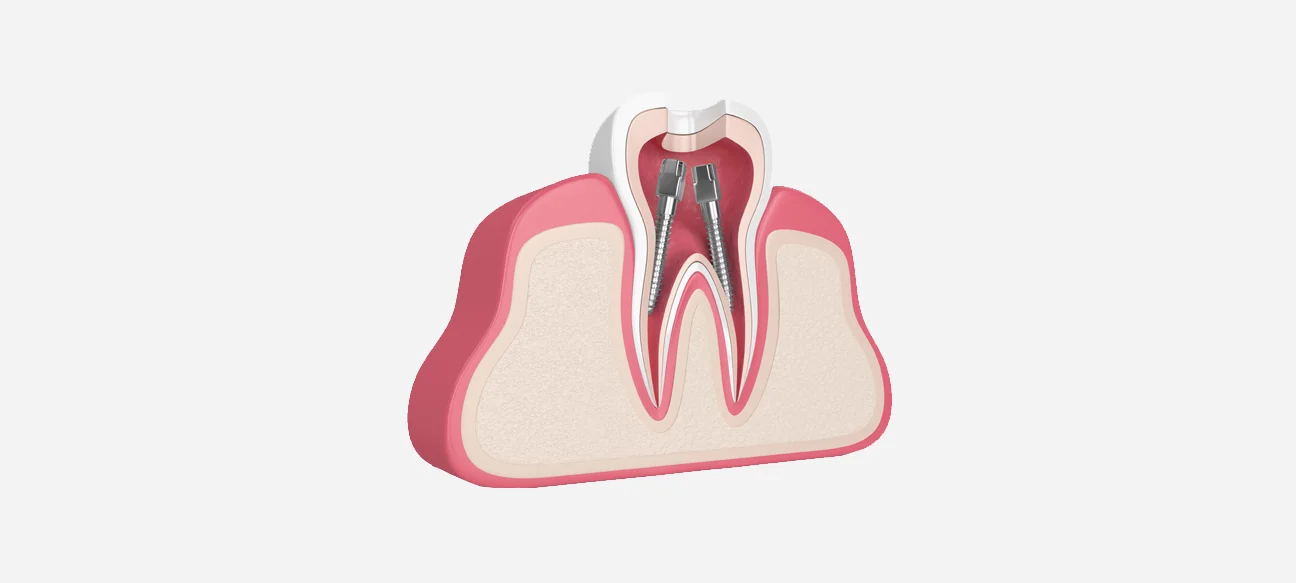
A root canal is performed to remove inflamed or infected pulp from inside the tooth and clean and seal the space within the roots.
The general process involves:
1. Numbing the tooth
The tooth and surrounding area are anesthetized before treatment begins.
2. Accessing the inside of the tooth
A small opening is made in the tooth to reach the infected or inflamed pulp.
3. Removing the affected pulp
The damaged pulp tissue is removed from inside the tooth.
4. Cleaning and shaping the canals
The root canals are carefully cleaned and shaped to prepare them for sealing.
5. Sealing the tooth
The cleaned canals are filled and sealed to help prevent further infection.
6. Restoring the tooth
Depending on the tooth and the amount of healthy tooth structure remaining, a crown or another restoration may be recommended to protect the tooth and restore its function.
The specific treatment depends on the tooth being treated and your individual circumstances.
What About Dental Anxiety?
We understand that the words “root canal” can make some people nervous.
If dental treatment makes you anxious, please tell us.
Patient comfort is an important part of the way we practice dentistry at Allen Creek Dental. Dr. Johnson currently offers minimal sedation for appropriate patients who would benefit from additional help relaxing during dental treatment.
We can discuss whether minimal sedation is appropriate for you as part of your treatment planning.
Our goal is to create an environment where you can ask questions, understand what is happening, and feel as comfortable as possible throughout your care.
You don’t have to be embarrassed about being nervous about dental treatment. We’d rather know so we can work with you.
How Long Does Root Canal Treatment Take?
The time required for root canal treatment depends on the tooth being treated, the complexity of the root canal system, the presence of infection, and other individual factors.
Before treatment begins, we’ll explain what we expect your appointment to involve.
If additional restorative treatment is needed afterward, such as a crown, we’ll discuss that with you as part of your overall treatment plan.
What Can I Expect After a Root Canal?
It is common for a treated tooth to feel different for a short period following treatment. Some tenderness or sensitivity may occur as the surrounding tissues recover.
We’ll give you specific instructions about caring for the tooth after your appointment and explain what to expect during recovery.
If you experience symptoms that concern you or don’t seem to be improving as expected, contact our office so we can evaluate the tooth.
Follow-up care may also be recommended to make sure the tooth is healing appropriately and to complete any necessary restoration.
Protecting Your Tooth After Root Canal Treatment
A root canal removes the infected or inflamed pulp, but the tooth still needs to be cared for after treatment.
Depending on the tooth and the amount of remaining structure, a dental crown may be recommended to provide additional protection and restore normal function.
Good oral hygiene, regular dental examinations, and caring for the final restoration are important for maintaining the treated tooth.
How long a root canal-treated tooth remains functional varies from patient to patient. Factors such as the amount of healthy tooth structure remaining, the final restoration, bite forces, oral hygiene, grinding or clenching, and everyday habits can all affect its long-term function.
Experienced, Comprehensive Care in Grants Pass
Dr. Michelle Johnson has been practicing dentistry in Oregon since 1999 and has cared for patients in Grants Pass since opening Allen Creek Dental in 2003.
Her approach is to look at the whole dental picture, rather than treating a single tooth in isolation.
If a tooth needs a root canal, we can evaluate the tooth, discuss whether it can be restored, explain your options, and coordinate the restorative care needed afterward.
And if your symptoms suggest that a root canal isn’t the right treatment, we’ll explain that too.
You deserve to understand why a treatment is being recommended before you decide to proceed.
Root Canal Treatment in Grants Pass, Oregon
If you have persistent tooth pain, prolonged sensitivity, swelling, tenderness when biting, or a tooth that has been damaged, don’t wait for the problem to become more serious.
Allen Creek Dental provides root canal evaluations and treatment in Grants Pass, Oregon, and welcomes patients from Rogue River, Medford, Cave Junction, Gold Hill, Merlin, Roseburg, Brookings, White City, and Crescent City, California.
Contact our office to schedule an evaluation with Dr. Michelle Johnson and find out what’s causing your symptoms and what treatment options may be appropriate.
Concerned about dental treatment? Let us know. We’re here to help you feel comfortable while taking care of your dental health.
Frequently Asked Questions
Not always. Whether a crown is recommended depends on the amount of healthy tooth structure that remains and the location of the treated tooth.
Some tenderness or sensitivity may occur briefly after treatment. We will properly explain what to expect during recovery and when to contact our office about any persistent or worsening symptoms.
Yes, reinfection can occur in some situations. If new pain, swelling, or other concerns develop around a previously treated tooth, an examination can help determine whether additional care is needed.
Your dentist evaluates the condition of the pulp, surrounding tissues, restorability of the tooth, and diagnostic findings before recommending the most appropriate course of treatment.


